Philosophy for everyday life

We have much to live from. But what do we live for?

1:1 sessions available nowBook a 50-minute individual conversation with Michael through Preply.
Book via Preply ↗

Will to Meaning explores the human capacity for freedom, conscience, responsibility and meaning. It draws on Viktor Frankl’s logotherapy, ancient philosophy and ideas that can guide ordinary life.

Viktor Frankl

A meaning-centered school of psychotherapy

Viktor E. Frankl was a Viennese neurologist and psychiatrist who survived four concentration camps. He founded logotherapy and existential analysis, often called the Third Viennese School of Psychotherapy after Freud’s psychoanalysis and Adler’s individual psychology.

Viktor Frankl

Three principles that lead into one another.

Frankl’s three fundamental ideas form a chain. Freedom makes orientation possible. The will seeks meaning. Meaning waits to be discovered in the concrete situation.

Three views of motivation

Pleasure, power, or meaning?

This contrast is a useful orientation, not a complete account of any school. Frankl did not deny pleasure or power. He argued that neither reaches the deepest human motivation.

Viktor Frankl

The person is more than body and psyche.

Viktor E. Frankl was a Viennese psychiatrist and neurologist, the founder of logotherapy and existential analysis. His dimensional anthropology explains why every reduction of the person leaves something essential unseen.

Frankl's two laws of dimensional ontology

Why a projection is never the whole person

01

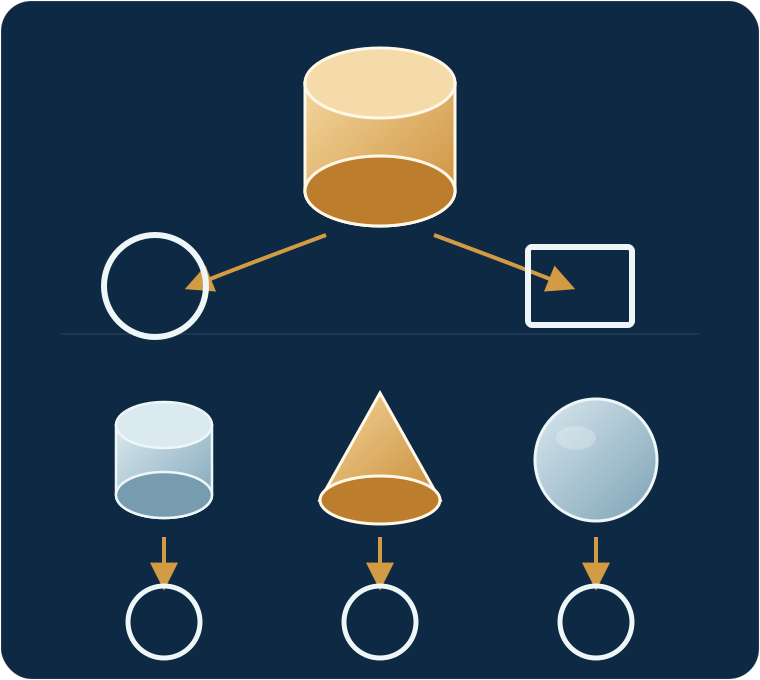
One whole can produce conflicting projections. A cylinder viewed from above appears as a circle. Viewed from the side, it appears as a rectangle. Both images are correct, but neither contains the whole.

02

Different wholes can produce the same projection. A cylinder, a cone and a sphere can all cast a circular image. From that lower dimension alone, we cannot know which reality produced it.

Applied to us: biology may describe chemistry, genes and illness. Psychology may describe emotions, conditioning and behaviour. These views can be true without being complete. If we omit the noetic dimension of conscience, freedom, responsibility and meaning, we mistake a projection for the person.

Frankl’s anthropology

Ten theses about the person.

Frankl formulated these theses to protect the wholeness and dignity of the person against reductionism. Open each one for a short, accessible explanation.

Services

Meaning-centred conversations for real life.

A place to think clearly about direction, difficult choices, responsibility and what your situation may be asking of you.

Online worldwideEnglishDeutschIndividual 1:1
Available via Preply

Book a 1:1 conversation

Individual 50-minute sessions are currently available through Michael's Preply profile.

Book via Preply ↗
Michael Oryl
Michael OrylCreator of Will to Meaning
About

Still learning. Already sharing.

I’m Michael, German with Polish roots, currently living and working in Japan. I hold a PhD in Business Administration and am training in logotherapy and existential analysis.

I created Will to Meaning because philosophical ideas are too valuable to remain abstract. They can help us face emptiness, difficult circumstances and the part of life that is still ours to shape.

This is a new project. I am learning, applying these ideas in my own life and translating them into practical language without quick fixes or motivational clichés.

Support the project

Help Will to Meaning grow.

Essays and educational content will remain available to everyone. One-time support is now possible through PayPal.

Coming Soon

Patreon

Support longer essays, videos and educational material through a regular contribution.

Patreon coming soon

Sources and further reading

The summaries of Frankl’s anthropology are educational introductions. For primary institutional material, visit the Viktor Frankl Institute Vienna:

Biography and work · Logotherapy and existential analysis · Texts and ten theses

Meaning is not found by circling the self. It is found by answering something beyond it.
Follow on Instagram ↗